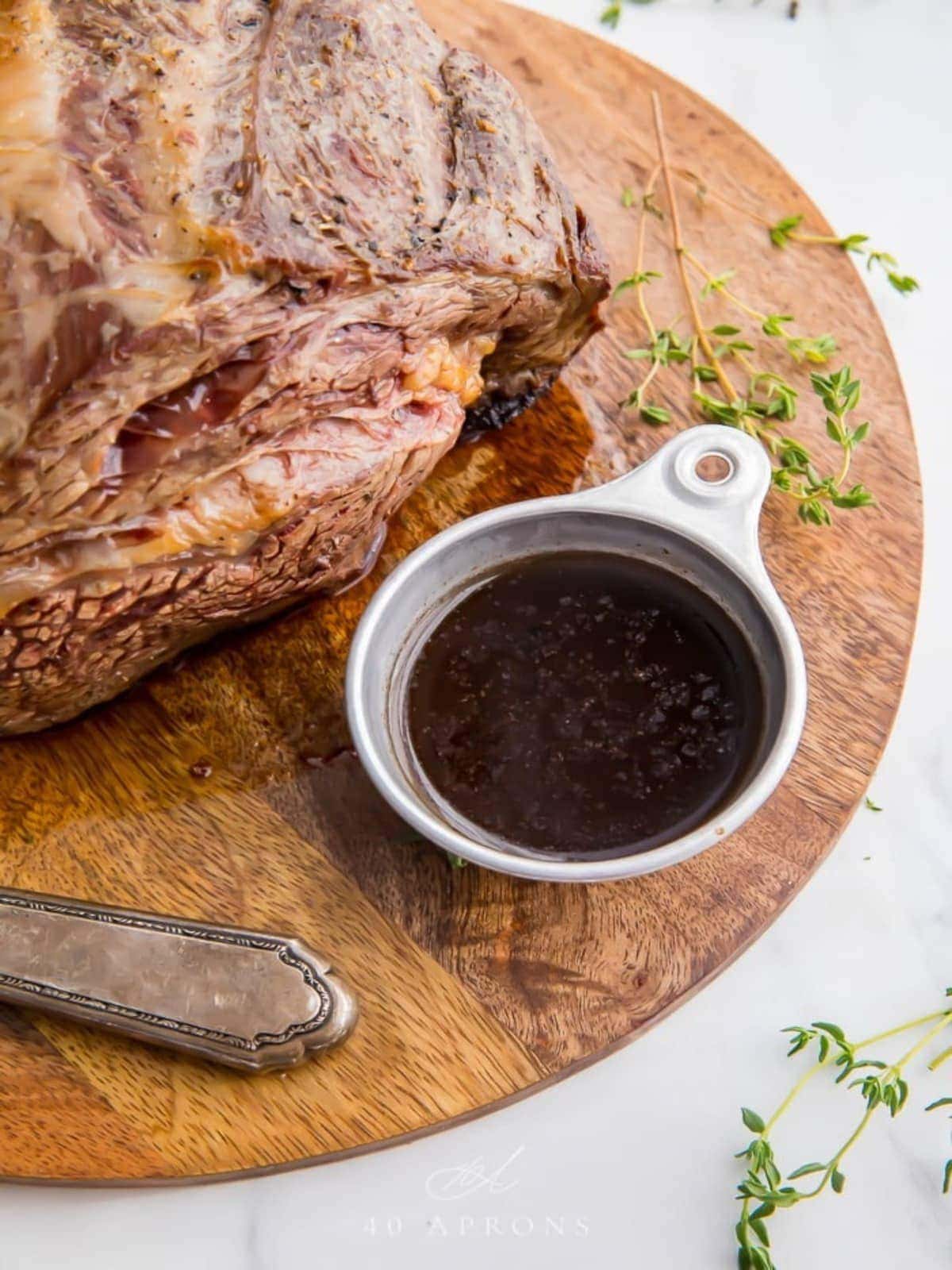
Make Rich Au Jus: Quick & Easy, Even Without Meat Drippings
Imagine a rich, savory broth, teeming with deep beefy flavor, ready to elevate your favorite roasts, prime rib, or the ultimate French dip sandwich. That, my friends, is au jus. And what if we told you that creating this culinary masterpiece is not only quick and easy but entirely possible even if you don't have a single pan dripping to your name? You heard right! This comprehensive guide will show you how to craft perfect au jus with or without drippings, transforming your meals with minimal effort and maximum flavor.
For too long, many home cooks have believed that a truly spectacular au jus relies solely on the precious, browned bits left in a roasting pan. While those drippings certainly provide an incredible foundation, they are by no means a prerequisite. Whether you're making a festive holiday roast, whipping up weeknight beef dishes, or just craving that signature French dip sauce, our method ensures a consistently delicious result in under 15 minutes, making it a freezer-friendly staple you'll wonder how you lived without.
What Exactly Is Au Jus? Unpacking the Flavorful "Juice"
The term "au jus" (pronounced "oh joo") is derived from French, quite literally meaning "with juice." Historically, it referred to dishes served alongside the natural, un-thickened juices that rendered from the cooking meat itself. This traditional preparation was simple: fat was skimmed from the pan drippings, and the remaining liquid might be gently simmered with a little stock and water to concentrate its flavors into a light, savory broth.
However, the modern American interpretation of au jus, which we'll be focusing on, often takes on a slightly different form. While still thinner than a traditional gravy, it's typically a more composed sauce, enriched with additional ingredients to deepen its complexity. You might find recipes incorporating elements like beef stock, red wine vinegar, Worcestershire sauce, garlic, and even a touch of flour for a barely perceptible thickening – just enough to give it body without crossing into gravy territory. This American-style au jus is designed to enhance, rather than merely accompany, a dish, providing an extra layer of savory goodness.
It's important to note the common misspellings of au jus – everything from "aus jus" and "aujus" to "au ju sauce" and "aju sauce" pops up! Rest assured, the correct term refers to that magnificent, rich liquid that's about to become your new favorite sauce. And while saving those beef drippings whenever you cook is a fantastic habit (they freeze beautifully for up to six months!), our recipe ensures you're never dependent on them for an outstanding result.
Au Jus vs. Gravy: Unraveling the Delicious Distinctions
At first glance, au jus and gravy might seem similar – both are savory, often beef-based sauces served alongside meat. However, there's a fundamental difference that sets them apart, particularly in their texture and preparation. Understanding this distinction is key to appreciating the unique role each plays in a meal.
Gravy, in its most common form, is significantly thicker than au jus. It achieves this viscosity through the addition of a thickening agent, most commonly flour or cornstarch, often combined with a fat (like butter or pan drippings) to create a roux. This gives gravy a rich, sometimes creamy texture that coats food more substantially. Gravy recipes also frequently incorporate other ingredients like sautéed onions, herbs, or even vegetables, resulting in a heartier, more opaque sauce that can be a meal in itself. For a deeper dive into these differences, you can explore our detailed comparison: Au Jus vs. Gravy: Master the Ultimate Sauce for French Dips.
Au jus, on the other hand, is characteristically lighter and thinner. While some American-style recipes, like the one we're discussing, might incorporate a tiny amount of flour, it's used sparingly, just enough to give the liquid a silky mouthfeel without making it thick or opaque. The focus of au jus is on amplifying the natural, concentrated flavor of the meat juices or a high-quality beef stock, creating a translucent, intensely savory broth designed for dipping, drizzling, and enhancing without overpowering. It's about a pure, clean beef essence, rather than a creamy, comforting sauce.
Think of it this way: gravy is a comforting blanket for your mashed potatoes, while au jus is a vibrant, flavorful embrace for your roast beef sandwich. Both are delicious, but they offer distinct culinary experiences.
The Magic Formula: Crafting Au Jus With or Without Drippings
The beauty of this recipe lies in its adaptability. Whether you've just finished roasting a prime rib and have a treasure trove of pan drippings, or you're starting from scratch, you can achieve a deeply flavorful au jus. The core principle involves building layers of umami and savory notes. This particular recipe delivers exceptional results in just 15 minutes, and it's fantastic for freezing, as detailed in our Quick & Flavorful Au Jus: The 15-Minute Recipe You Can Freeze guide.
Ingredients You'll Need:
- For the Base:
- High-quality beef stock or broth (this is crucial for flavor, especially without drippings)
- Unsalted butter
- All-purpose flour (for optional, slight thickening)
- Flavor Enhancers:
- Worcestershire sauce (adds depth and umami)
- Red wine vinegar (brightens and balances flavors)
- Garlic (minced or powdered)
- Onion (finely diced or powdered)
- Salt and freshly ground black pepper to taste
- Optional (but highly recommended if available):
- Beef pan drippings (skimmed of excess fat)
Method:
- The Foundation (With or Without Drippings):
- If using beef drippings: Carefully pour the drippings from your roasting pan into a heatproof container. Allow the fat to separate and rise to the top, then skim off and discard most of the fat, leaving behind the concentrated flavorful juices. You can also use a fat separator.
- In the same roasting pan (or a saucepan if not using drippings), melt 1-2 tablespoons of unsalted butter over medium heat.
- Aromatic Base: Add minced garlic and finely diced onion (if using fresh) to the melted butter. Sauté gently until softened and fragrant, about 2-3 minutes.
- Optional Thickener (for American-style au jus): Sprinkle 1 tablespoon of all-purpose flour over the sautéed aromatics. Cook, stirring constantly, for 1 minute to cook out the raw flour taste. This step creates a very light roux, providing a subtle body without making it thick like gravy.
- Deglaze & Build Flavor (The Key Step):
- If you have pan drippings: Add the skimmed drippings to the pan. Use a wooden spoon to scrape up any browned bits (fond) from the bottom of the pan – these are bursting with flavor!
- If you are making au jus without drippings: Pour about ½ cup of beef stock into the pan. Scrape up any browned bits from the light roux and aromatics.
- Add the remaining beef stock, Worcestershire sauce, and red wine vinegar to the pan. Stir everything together until well combined.
- Simmer & Season: Bring the mixture to a gentle simmer, then reduce the heat to low. Let it simmer for 5-10 minutes, allowing the flavors to meld and deepen slightly. Taste and season with salt and freshly ground black pepper as needed. Remember, good beef stock is already savory, so season gradually.
- Strain for Smoothness: For an exceptionally smooth au jus, pour the finished liquid through a fine-mesh sieve to remove any onion, garlic, or small particles. You can gently press on the solids with the back of a spoon to extract maximum flavor before discarding them.
Your rich, flavorful au jus is now ready to serve!
Tips for the Best Au Jus Every Time
- Invest in Quality Beef Stock: This is arguably the most crucial ingredient, especially when making au jus with or without drippings. A good quality, low-sodium beef stock or bone broth will provide the deep, complex flavor you're looking for. Avoid overly salty or artificial-tasting broths.
- Don't Skip the Umami Boosters: Worcestershire sauce is a classic for a reason. For an even deeper punch, consider adding a dash of soy sauce or even a tiny squeeze of tomato paste during the sautéing stage. Mushroom powder is another secret weapon for adding savory depth.
- The Power of Deglazing: If you have drippings, don't underestimate the power of deglazing the pan. Those browned bits (the fond) at the bottom of the pan are concentrated flavor. Scraping them up with liquid releases all that deliciousness into your au jus.
- Gentle Simmering: Don't boil your au jus vigorously, as this can lead to a cloudy appearance and diminish some of the delicate flavors. A gentle simmer is all you need to meld ingredients.
- Taste and Adjust: Always taste your au jus before serving. It's a fundamental cooking principle. You might want a little more salt, pepper, a touch more vinegar for brightness, or even a tiny pinch of sugar to balance acidity.
- Make Ahead and Freeze: Au jus is incredibly freezer-friendly. Make a double batch and freeze it in smaller portions (ice cube trays are great for this!) for quick access whenever you need a flavor boost. It thaws beautifully and reheats on the stovetop.
Serving Suggestions & Storage
Once you've tasted your homemade au jus, you'll find countless ways to incorporate it into your meals. It's a versatile sauce that goes far beyond just a holiday roast.
- French Dip Sandwiches: This is the ultimate pairing! Serve warm au jus in small bowls for dipping your roast beef and provolone sandwiches.
- Roast Meats: Drizzle generously over prime rib, roast beef, pork loin, or even roast chicken to add moisture and flavor.
- Mashed Potatoes: A delicate alternative to gravy, au jus can add a lovely savory note to creamy mashed potatoes.
- Steak Sauce: A simple pan reduction with au jus can create an incredible steak sauce.
- Dipping Bread: Serve it with crusty bread for a simple, yet incredibly satisfying appetizer.
- Holiday Dinners: Essential for Christmas, Thanksgiving, or any special occasion where a roast takes center stage.
Storage: Store leftover au jus in an airtight container in the refrigerator for up to 3-4 days. For longer storage, freeze it. Pour cooled au jus into freezer-safe containers, zip-top bags (laid flat), or even ice cube trays. It will keep beautifully for up to 6 months. To reheat, simply thaw in the refrigerator overnight and gently warm on the stovetop or in the microwave.
Elevate Your Meals Effortlessly
Making rich, flavorful au jus with or without drippings is a game-changer for any home cook. It’s a testament to how simple, quality ingredients, combined with a few smart techniques, can produce truly spectacular results. This quick, easy, and freezer-friendly recipe means you no longer have to wait for a special occasion or be limited by the availability of meat drippings. Embrace the versatility, savor the depth of flavor, and get ready to impress yourself and your guests with this incredible homemade au jus. Happy cooking!
